With a view to implementing the activities set out in the Roadmap for the implementation of EU animal welfare legislation in Ukraine for 2025–2027 (Roadmap), a training course was held from 28 April to 1 May 2026 to enhance the professional skills of specialists from the State Service of Ukraine on Food Safety and Consumer Protection (SSUFSCP), based on the approved special short-term programme “Animal welfare requirements and the exercise of state control (supervision) over compliance with these requirements (basic level)”. The training was organised by the Training Centre of the State Scientific Research Institute of Laboratory Diagnostics and Veterinary and Sanitary Expertise (SSRILDVSE) with the support of specialists from the Ministry of Economy, Environment and Agriculture of Ukraine (MEEAU), the head office of the SSUFSCP, as well as experts from the Swiss-Ukrainian Programme “Higher Value Added Trade from the Organic and Dairy Sector in Ukraine” (QFTP).
The training was delivered remotely and attracted over 500 participants. Representatives from the Main Administrations in the regions and Inter-regional Administrations of the SSUFSCP, State Veterinary Hospitals, as well as authorised officials responsible for carrying out specific state control measures in the field of animal welfare, took part.
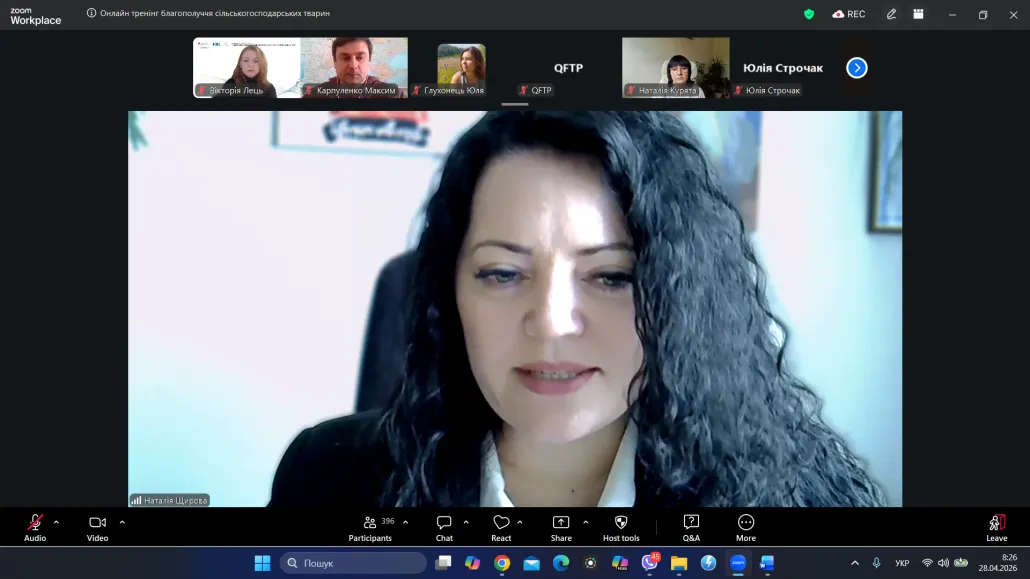
Natalia Shchyrova, Acting Director of the Department of State Policy on Sanitary and Phytosanitary Measures and Food Safety of the MEEAU, emphasised in her opening remarks that Ukraine has already moved from the stage of aligning national legislation on farmed animal welfare with EU rules to the stage of actual its implementation and practical application.
“A significant part of the national legislation on farmed animal welfare has already been brought into force and is mandatory for all food business operators (hereinafter – FBOs). To ensure the effective implementation of these requirements, measures are being actively taken to raise awareness among FBOs, the necessary tools are being developed, and training is underway for specialists from the competent authority to carry out effective official controls on compliance with these requirements,” she noted.
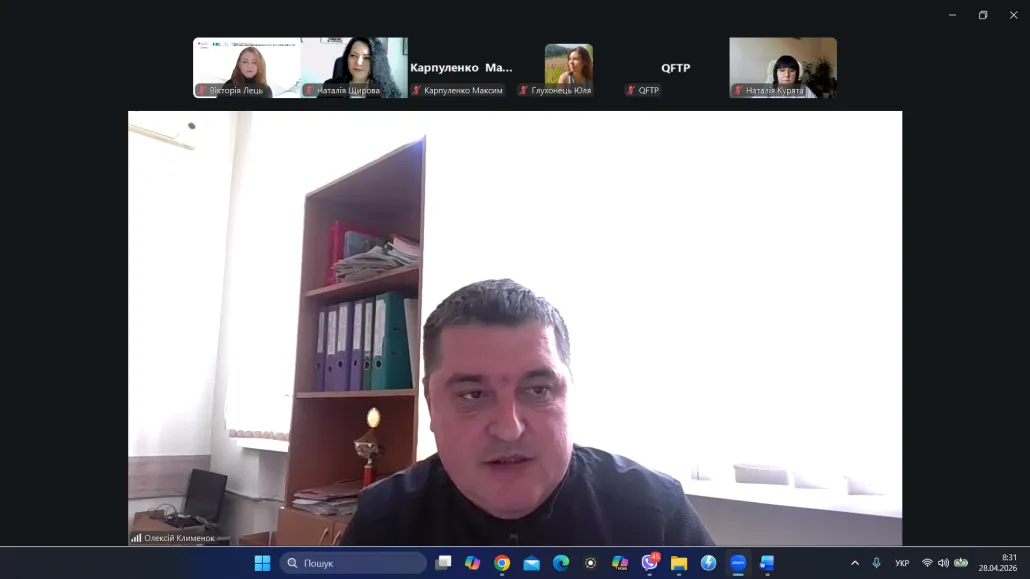
Oleksii Klymenok, Head of the Animal Health and Welfare Devision of the Directorate of Animal Health and Welfare, Organization of Anti-Epizootic Measures of the Department of Food Safety and Veterinary Medicine, SSUFSCP, added: “For us, this is not training for the sake of a certificate — it is practical training and strengthening the professional capacity of specialists involved in carrying out state control measures in the field of animal welfare, because every inspector or official veterinarian must be not just a controller, but a partner for business — professionally assessing processes and identifying opportunities to improve animal welfare”.
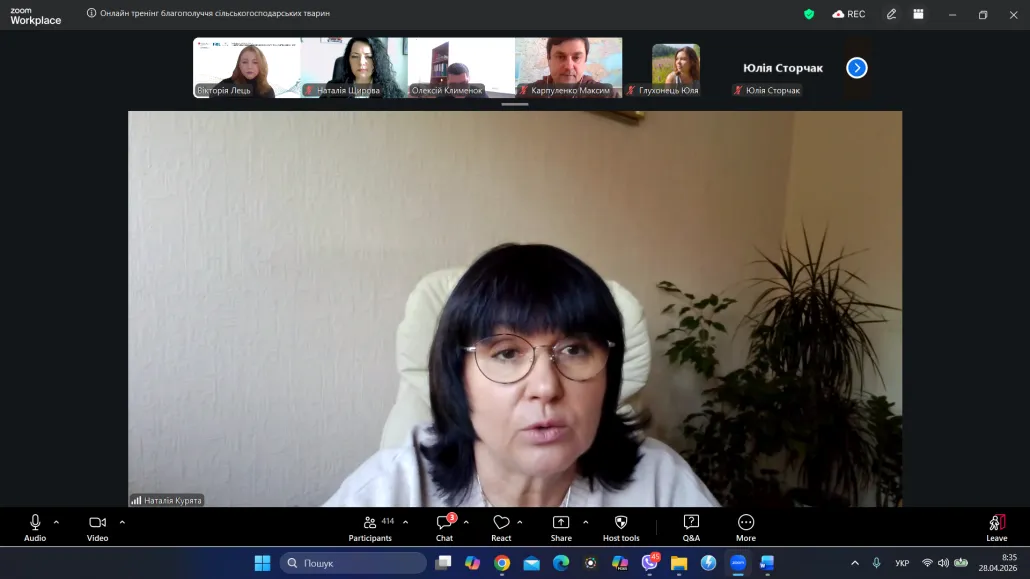
Natalia Kuryata, Deputy Director and Head of the Testing Centre of the SSRILDVSE, thanked all participants who took part in the training session and noted: “The high level of interest in the event confirms the importance of the topics discussed, as the implementation of animal welfare requirements is an integral part of Ukraine’s European integration, demonstrates the civility of society and contributes to increasing international trust”.
The aim of this training was to enhance the level of professional knowledge and competencies required to ensure a unified approach to state control over compliance of FBOs with national legislation on the welfare of farmed animals during keeping, transport and slaughter.
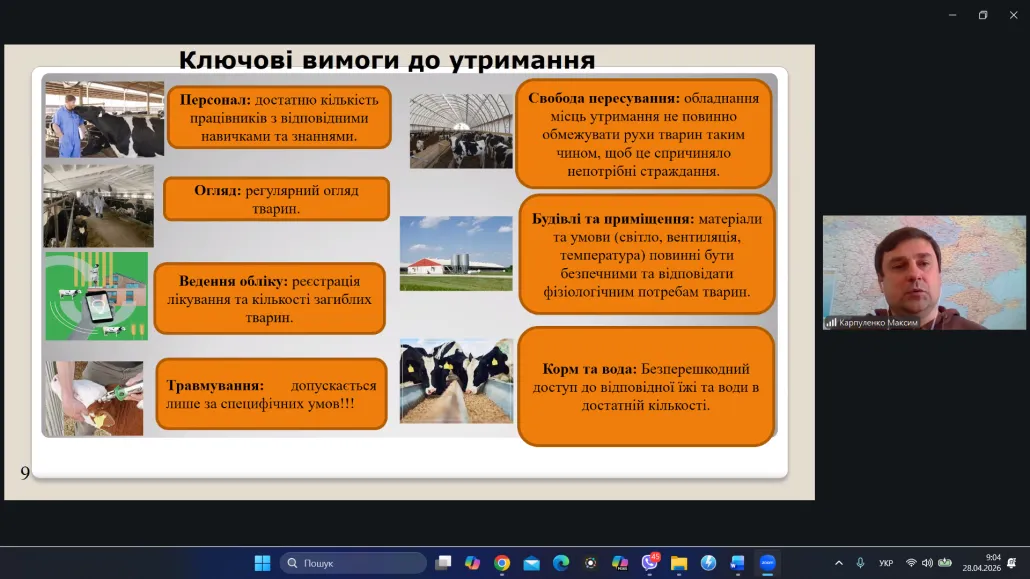
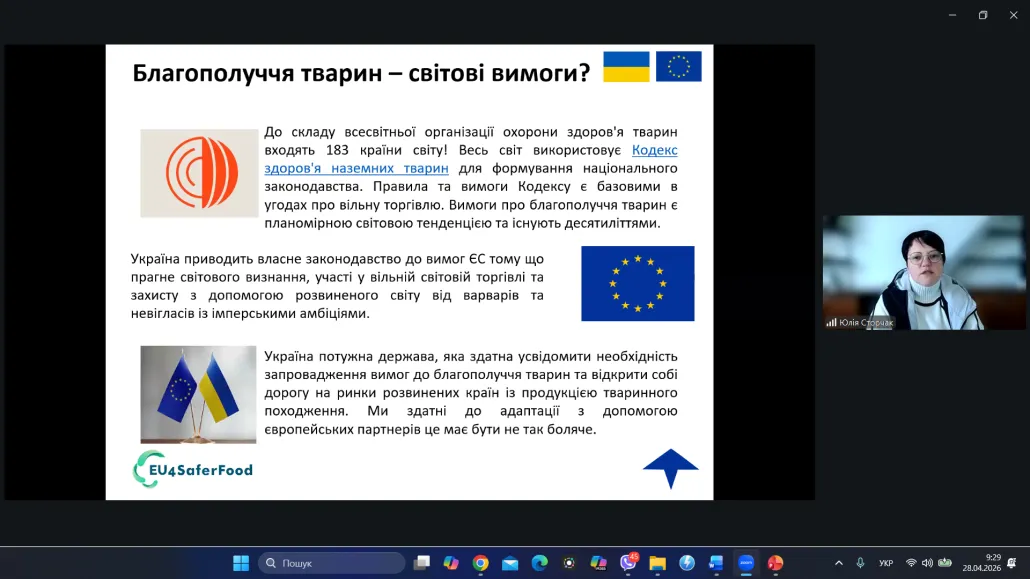
The training was led by qualified trainers who had taken part in a trainer-of-trainers course from 20 to 24 October on the topic of “Specifics of state control (supervision) over compliance with legislation on the welfare of farmed animals during keeping”, namely Maksym Karpulenko, Senior Researcher of the Research Devision of Epizootology and Infectious Diseases of the SSRILDVSE, and Yulia Strochak, Acting Head of the Department of Food Safety and Veterinary Medicine at the Main Administration of the SSUFSCP in Lviv region. They highlighted the fundamental aspects of farmed animal welfare in accordance with the Terrestrial Animal Health Code of the World Organisation for Animal Health (WOAH) and EU regulations, and explained the need to implement farmed animal welfare requirements in Ukraine and to establish an effective system for monitoring compliance of FBOs with these requirements.
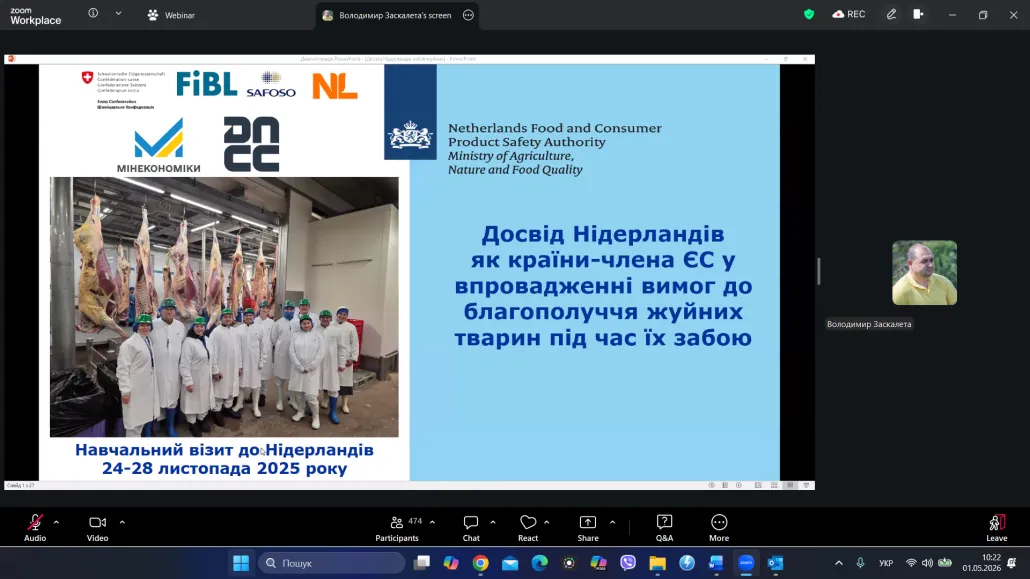
Svitlana Shlapatska, Deputy Head of the Animal Health and Welfare Devision of the Animal Health and Welfare Directorate, Organisation of Anti-Epizootic Measures, Department of Food Safety and Veterinary Medicine of the SSUFSCP, who took part in the study visit to the Kingdom of the Netherlands, spoke about the experience of this EU Member State in implementing farmed animal welfare requirements and carrying out official controls to ensure compliance with these requirements.
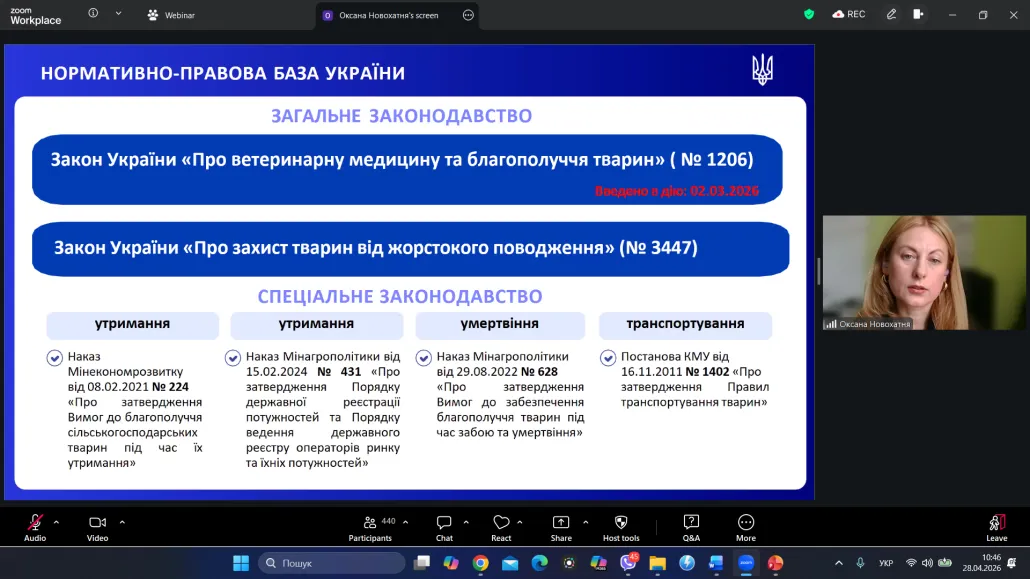
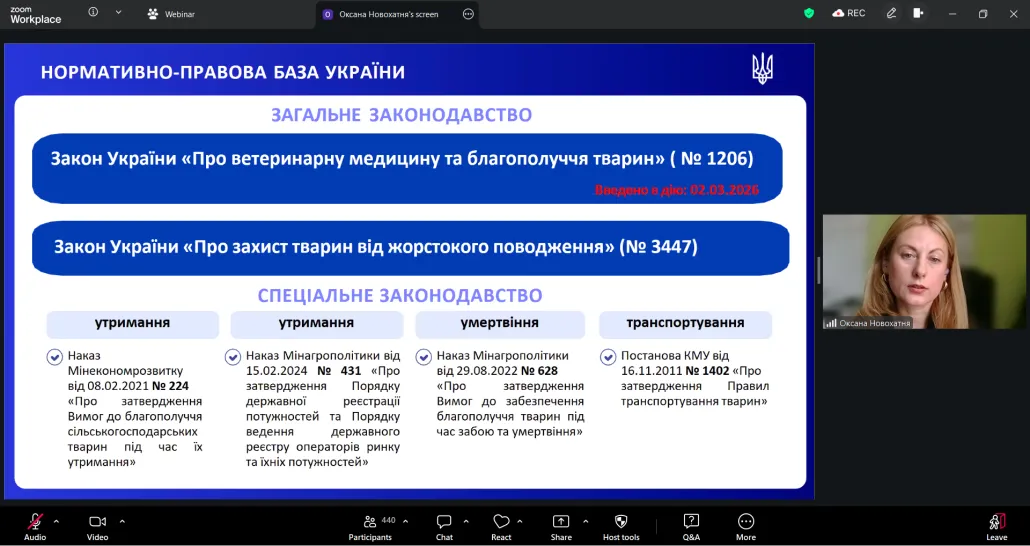
Oksana Novokhatna, Deputy Head of the Food Safety and Veterinary Medicine Directorate – Head of the Animal Health and Welfare Division within the Department of State Policy on Sanitary and Phytosanitary Measures and Food Safety of the MEEAU – presented the current status of the implementation of EU requirements regarding the welfare of farmed animals in national legislation, as well as plans to complete this process.
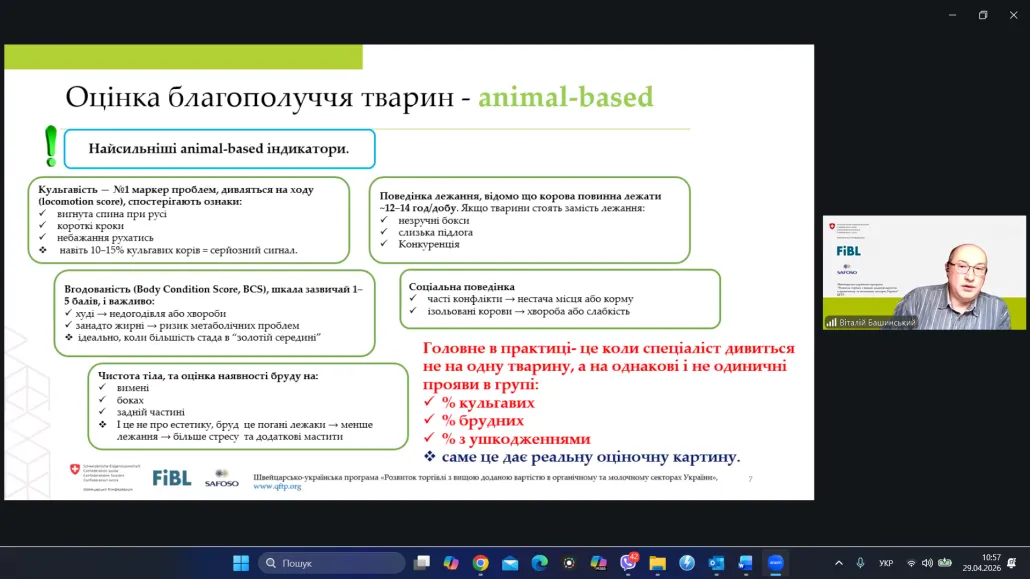
Viktoria Lets, Senior Consultant for the Dairy Sector Component, QFTP, spoke about the requirements of national legislation on the welfare of farmed animals during their keeping, which are fully in line with EU requirements and were approved by Order No. 224 of Ministry for Development of Economy, Trade and Agriculture of Ukraine dated 8 February 2021. These requirements come into force on 1 January 2026 and are mandatory for all FBOs. Continuing this topic, Julia Hüttl, an international expert for the Dairy Sector Component, QFTP, presented practical aspects of ensuring the welfare of cattle and calves during their keeping, whilst Vitaliy Bashynskyi, a consultant for the Dairy Sector Component, QFTP, explained the principles of conducting inspections to ensure that food business operators comply with legislation on the welfare of farmed animals during their keeping.
During the training, particular attention was also paid to the welfare of farmed animals during transport. The draft order from the MEEAU, “On the Approval of Requirements for Ensuring the Welfare of Animals during Transport and Related Operations”, is currently undergoing the approval process. To help participants better understand the practical aspects of implementing these rules, Viktoria Lets presented the experience of EU Member States in ensuring compliance with requirements regarding the welfare of farmed animals during transport and demonstrated how the system of official controls over their implementation works.
Vitaliy Bashynskyi presented in detail the requirements of national legislation on ensuring animal welfare during slaughter and killing, approved by Order No. 628 of the Ministry of Agrarian Policy and Food of Ukraine dated 29 August 2022. According to him, the document almost fully implements the relevant EU legislation, with the exception of certain aspects which will be brought into line in the near future. He emphasised that these requirements came into force on 2 March 2026, simultaneously with the Law of Ukraine No. 1206-IX of 4 February 2021 “On Veterinary Medicine and Animal Welfare”, with transitional periods in place until 1 January 2027. The presentation also highlighted the principles governing inspections to ensure comply of FBOs with these requirements. To conclude this topic, Julia Hüttl presented international experience in implementing welfare requirements for ruminants during slaughter, whilst Volodymyr Zaskaleta, Chief Specialist of the Animal Health and Welfare Division within the Food Safety and Veterinary Medicine Directorate of the Department of State Policy on Sanitary and Phytosanitary Measures and Food Safety at the MEEAU, shared insights gained during a study visit to the Kingdom of the Netherlands, regarding the role and responsibilities of the official veterinarian at the slaughterhouse in ensuring compliance with legislation on the welfare of ruminants during slaughter.
Participants highly praised the event, noting in particular the professionalism of the experts involved and the benefits of the interactive sessions held throughout the training, during which participants were required to answer multiple-choice or open-ended questions online after viewing practical videos and photos, as this facilitated better retention of the material.
All participants who diligently attended every day of the training and successfully passed the final test received certificates of professional development.
The training materials and video recordings will be used to create an online training course, which will be available to specialists at the SSUFSCP in the “Self-study” section of the “Distance Learning” module of the “Moco HR Process Automation and Talent Management System”.