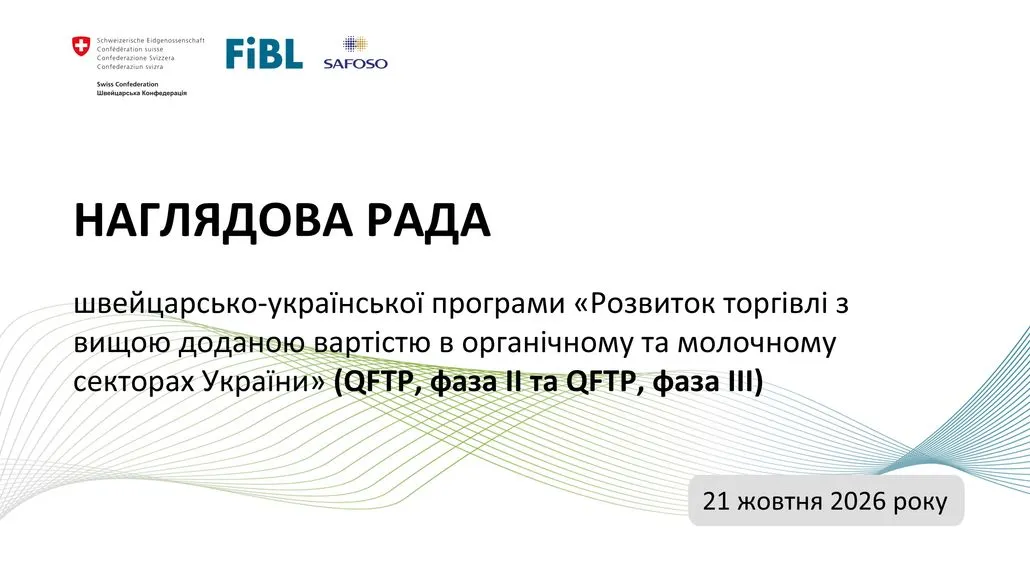
On 21 October 2026, the Steering Committee of the Swiss-Ukrainian Programme “Higher Value-Added Trade from the Organic and Dairy Sector in Ukraine” (QFTP) held a meeting and approved the Programme’s activity plan for the first programme year of Phase III (1 October 2026 – 30 September 2027). During the meeting, it was also announced that Switzerland had approved QFTP Phase III for 2026–2029, with a total budget of CHF 5.85 million.
QFTP Phase III will continue Switzerland’s long-term support for the development of Ukraine’s organic and dairy sectors. The overall objective of QFTP is to promote sustainable trade by strengthening the business competitiveness and capacities of small and medium-sized enterprises (SMEs) in the organic and dairy sectors. The Programme is implemented by the Research Institute of Organic Agriculture (FiBL, Switzerland) in partnership with SAFOSO AG (Switzerland).
The meeting brought together representatives of the Ministry of Agrarian Policy and Food of Ukraine, the State Service of Ukraine on Food Safety and Consumer Protection, the Entrepreneurship and Export Promotion Office, the Swiss State Secretariat for Economic Affairs (SECO), the Embassy of Switzerland in Ukraine, sector associations, sectoralorganisations, and the QFTP team.
Denys Bashlyk, First Deputy Minister of Agrarian Policy and Food of Ukraine, emphasised during his speech: “Despite the challenges posed by the full-scale war, Ukraine’s organic and dairy sectors continue to develop. The comprehensive activities of QFTP play an important role in this development, ranging from supporting legislative improvements and strengthening the capacities of public institutions to providing practical assistance to producers and raising awareness of changes in legislation and regulations in both sectors as they move towards European integration. The Ministry of Agrarian Policy and Food of Ukraine stands ready to remain a reliable partner of the Programme, as these sectors still have considerable potential for further development.”
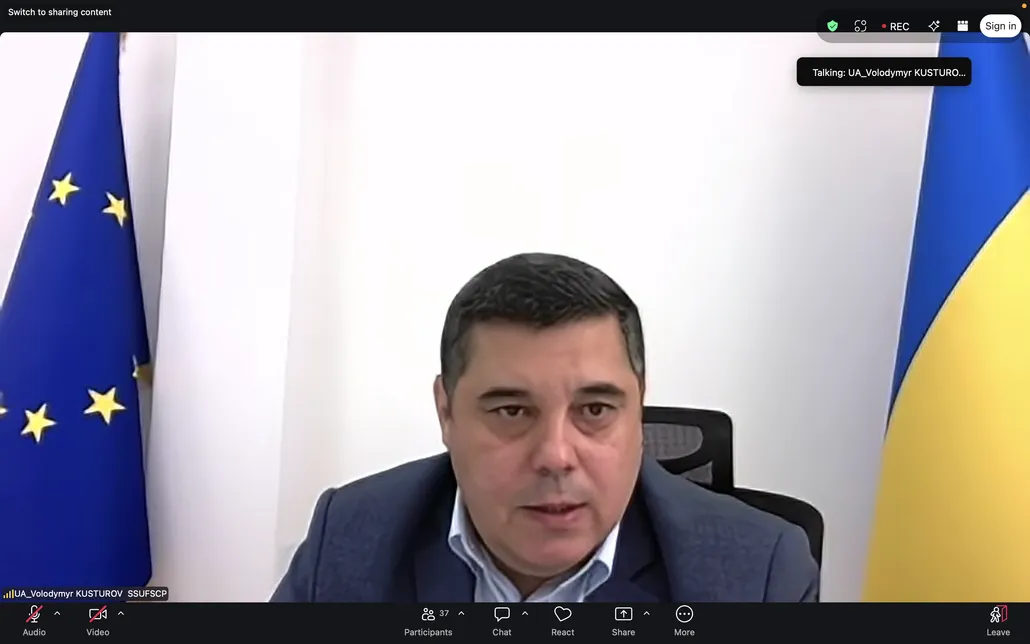
Volodymyr Kusturov, Deputy Head of the State Service of Ukraine on Food Safety and Consumer Protection, highlighted the results of many years of cooperation with QFTP.
“On behalf of the State Service of Ukraine on Food Safety and Consumer Protection, I would like to express my gratitude to Switzerland for its consistent support for Ukraine and its significant contribution to the development of the dairy and organic sectors during the full-scale war and as Ukraine progresses towards European integration. The QFTP has been and remains an important partner of the State Service in strengthening institutional capacity, improving the regulatory framework and preparing the sectors for Ukraine’s accession to the EU. It is particularly important that support for the organic and dairy sectors combines the development of the necessary regulatory solutions with the training of specialists and the strengthening of their practical capacities, facilitating the implementation of European standards and creating favourable conditions for Ukrainian micro, small- and medium-sized businesses.”
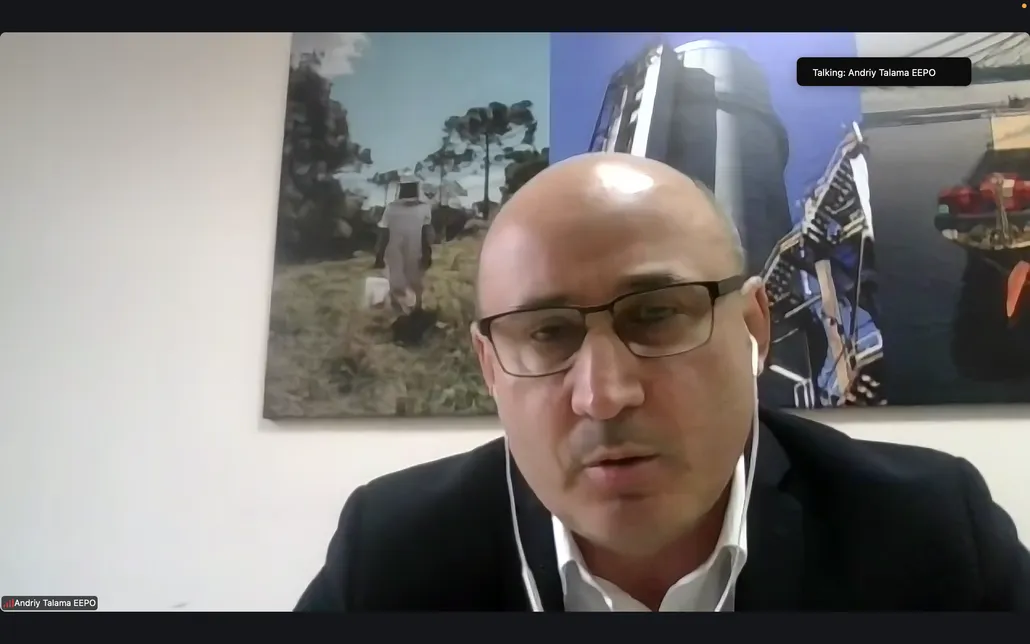
Andriy Talama, Director of the State Institution “Entrepreneurship and Export Promotion Office”, stressed the importance of continued support for the sectors and helping Ukrainian businesses enter new markets.
“Cooperation with QFTP is a practical partnership whose value we see in the results of our work with enterprises in the organic and dairy sectors, their export readiness and their entry into EU markets. It is important that these sectors have the potential to increase their share of European markets through the systematic efforts of the Entrepreneurship and Export Promotion Office, QFTP, the Ministry of Agrarian Policy and Food, and the State Service of Ukraine on Food Safety and Consumer Protection. At this stage of Ukraine’s European integration, it is no longer just about preparing for the future, but about ensuring the competitiveness of Ukrainian companies here and now. Applying EU rules opens up new market opportunities for businesses while also raising requirements for product quality and compliance with standards. Our shared task is to support enterprises through this transition and help them take advantage of new opportunities”.
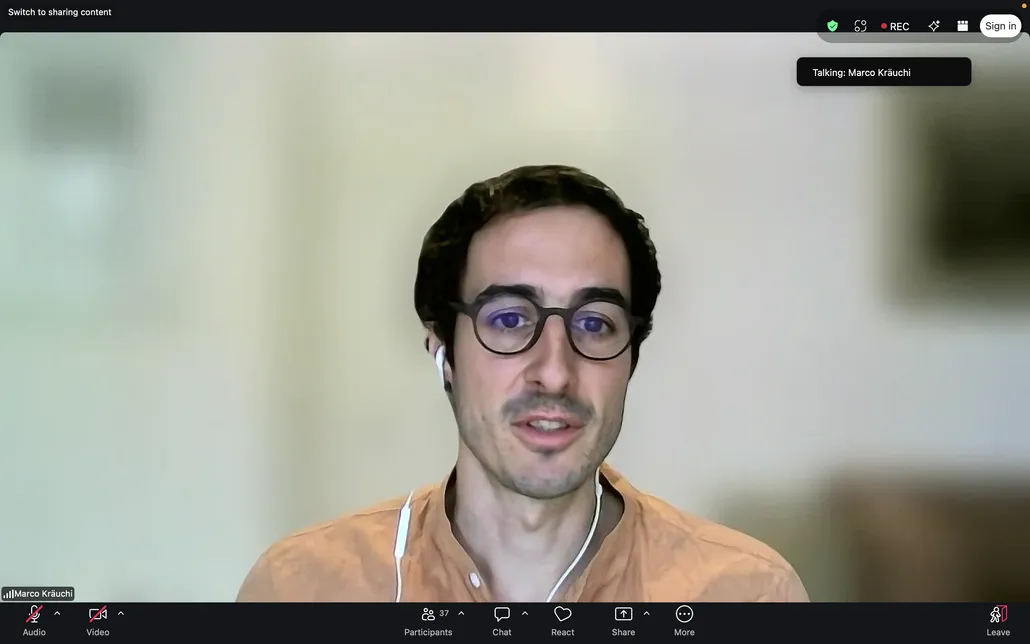
Marco Kräuchi, Program Manager, Organic Focal Point Trade Promotion Division, State Secretariat for Economic Affairs (SECO, Switzerland), highlighted Switzerland’s continued support for Ukraine’s organic and dairy sectors, the increased funding for QFTP Phase III and the Programme’s priorities for the coming years.
“SECO is continuing its support for Ukraine’s organic and dairy sectors, committing CHF 5.85 million to QFTP Phase III for 2026–2029 — a 50% increase in funding compared with Phase II. This reflects our conviction that these sectors have significant potential to strengthen Ukrainian businesses, sustain livelihoods and contribute to economic resilience, even under the difficult circumstances of the ongoing war.
The new phase will focus on aligning Ukraine’s regulatory framework with EU requirements and providing tailored technical support to SMEs through qualified sector service providers. Building on the commitment and cooperation of all partners, we are confident that together we can achieve our ambitious programme objectives.”
QFTP Phase III: From Regulatory Development to Business Readiness for Trade
QFTP Phase III (1 October 2026 – 30 September 2029) will strengthen support for European integration processes, build the capacities of public institutions and sector organisations, and expand opportunities for Ukrainian SMEs. The updated approach takes into account changes in the trading environment, the loss of some traditional markets due to the full-scale war, and rising logistics costs.
The Programme’s activities will focus on two interconnected areas:
- Regulatory framework. In the organic sector, QFTP will support the alignment of Ukrainian legislation with European Union regulations and their practical implementation, including in the context of the National Programme for the Adaptation of Ukrainian Legislation to EU Law. In the dairy sector, activities will cover a broader range of cross-cutting issues relevant to livestock farming, as well as the development of milk production from non-bovine .
Particular attention will be paid to strengthening official controls, ensuring compliance with legal requirements and developing relevant information systems.
- Trade. The Programme will help SMEs in the organic and dairy sectors improve their readiness to operate in domestic and international markets and develop and market higher value-added products. To achieve this, QFTP will strengthen the capacities of public and private service providers and sector networks to deliver high-quality, innovative services tailored to the needs of enterprises.
In Phase III, QFTP will enhance its support for the competitiveness of SMEs in the organic and dairy sectors, improve their trade readiness, and strengthen the capacities of sector organisations and professional service providers.
Activity Plan for 2026–2027
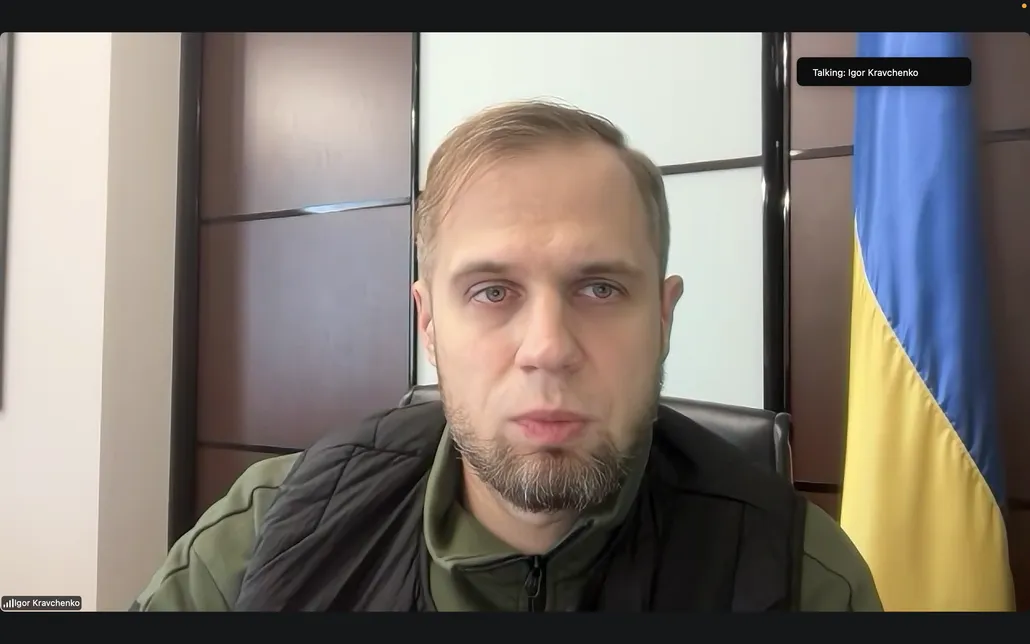
Igor Kravchenko, Local Programme Manager and Organic Sector Component Coordinator, presented the organic component’s activity plan for the first programme year:
“In QFTP Phase III, we will continue supporting the European integration of Ukraine’s organic sector, improving the regulatory framework and strengthening the capacities of public institutions. At the same time, we are gradually changing our approaches to supporting small and medium-sized enterprises. While previously a significant share of our efforts focused on directly facilitating exports, including producers’ participation in international trade events, we will now place greater emphasis on improving enterprises’ readiness to enter international markets. This primarily involves strengthening their competitiveness, improving access to market information, providing tailored technical support and developing higher value-added products.
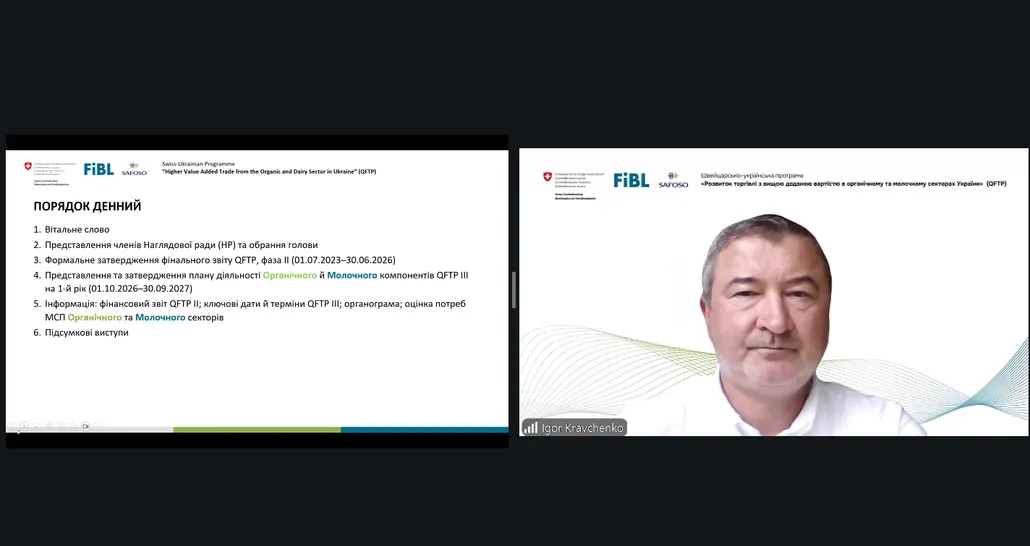
Another important priority remains the development of the domestic organic market by expanding cooperation between producers and retail chains, promoting Ukrainian organic products and stimulating consumer demand. At the same time, in Phase III, we will pay particular attention to strengthening the capacities of Ukrainian sector organisations and service providers. Our objective is to create conditions in which professional support for producers will continue even after the QFTP Programme ends,” Igor Kravchenko noted.
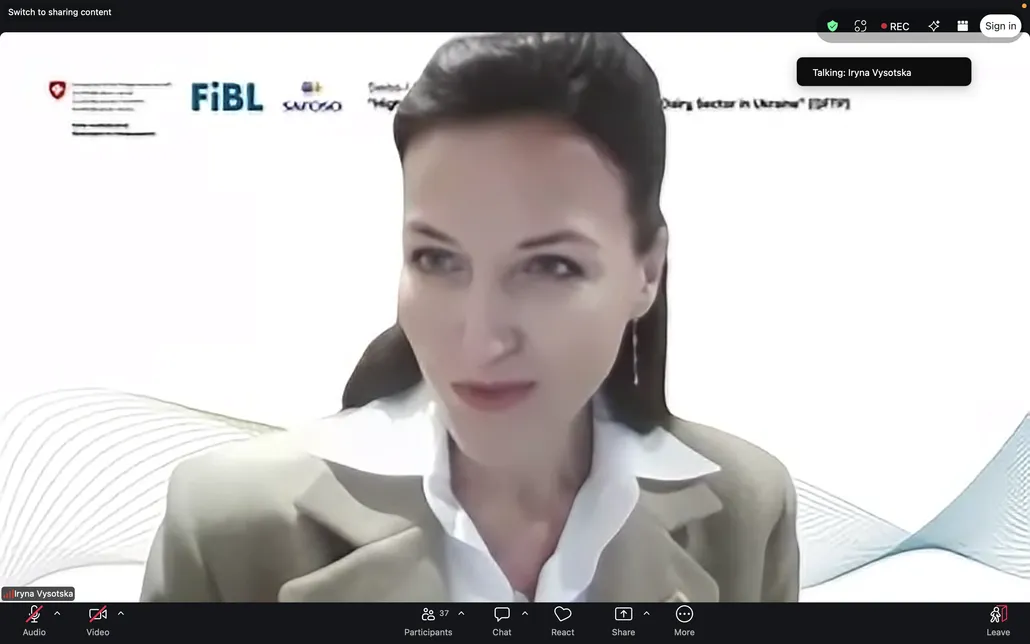
Iryna Vysotska, Deputy Local Manager and Dairy Sector Component Coordinator, also presented the component’s activity plan:
“In the new phase of the Programme, we aim to combine two key areas: supporting the European integration of Ukraine’s dairy sector and strengthening the competitiveness of Ukrainian producers in domestic and international markets. Our priorities include improving legislation in line with EU requirements, strengthening the institutional capacities of competent authorities, further developing the Raw Milk Control Programme, and supporting micro, small and medium-sized enterprises. At the same time, it is important for us not only to help producers adapt to new requirements but also to create practical opportunities for their development through training, advisory services, improved market access and export support,” she said.
According to Iryna Vysotska, the activity plan was developed taking into account the needs of the public and private sectors identified through consultations and surveys.
“Our task is not simply to implement individual activities, but to work together with partners to achieve systemic changes that will make Ukraine’s dairy sector stronger, more resilient and more competitive,” Iryna Vysotska emphasised.
Following the presentations, participants discussed the proposed activities and approved the QFTP activity plan for the first programme year of Phase III.
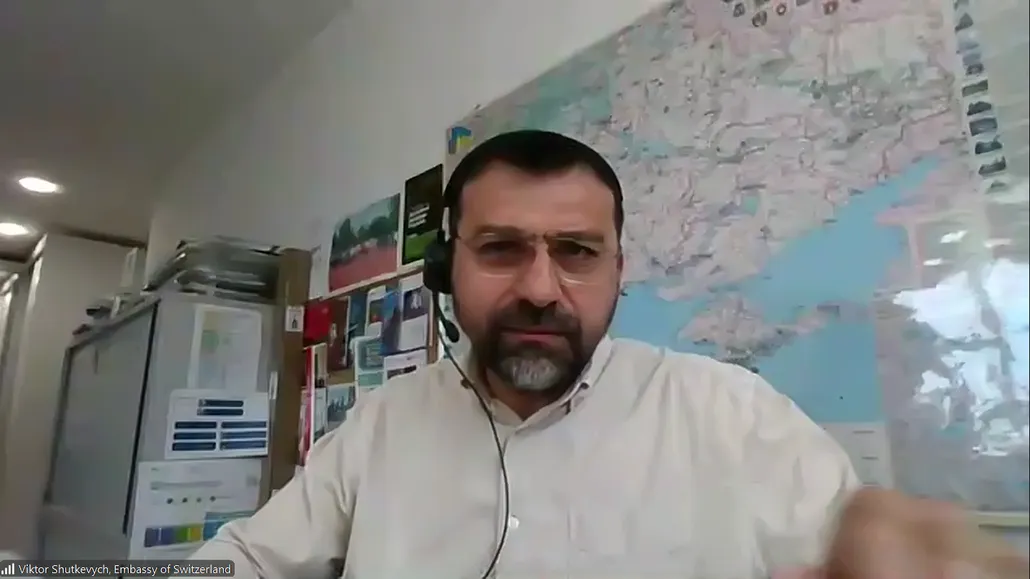
Concluding the meeting, Viktor Shutkevych, Senior National Program Officer at the Swiss Embassy in Ukraine, stated:
“Switzerland has consistently supported the development of Ukraine’s organic and dairy sectors for many years, and the approval of QFTP Phase III confirms the long-term nature of our partnership. At the same time, Phase III will be the final phase of the QFTP Programme. Therefore, one of our key priorities for the next three years is to ensure the sustainability of the results achieved. It is important not only to continue supporting businesses and sector organisations but also to strengthen their capacities and establish effective mechanisms and professional services that Ukrainian partners will be able to maintain and further develop independently after the Programme ends. We count on the active involvement and close cooperation of all partners, as their engagement and shared responsibility for results will be key to QFTP’s long-term impact.”
Phase III of the Swiss-Ukrainian Programme “Higher Value-Added Trade from the Organic and Dairy Sector in Ukraine” (QFTP) is funded by Switzerland and implemented by the Research Institute of Organic Agriculture (FiBL, Switzerland) in partnership with SAFOSO AG (Switzerland).