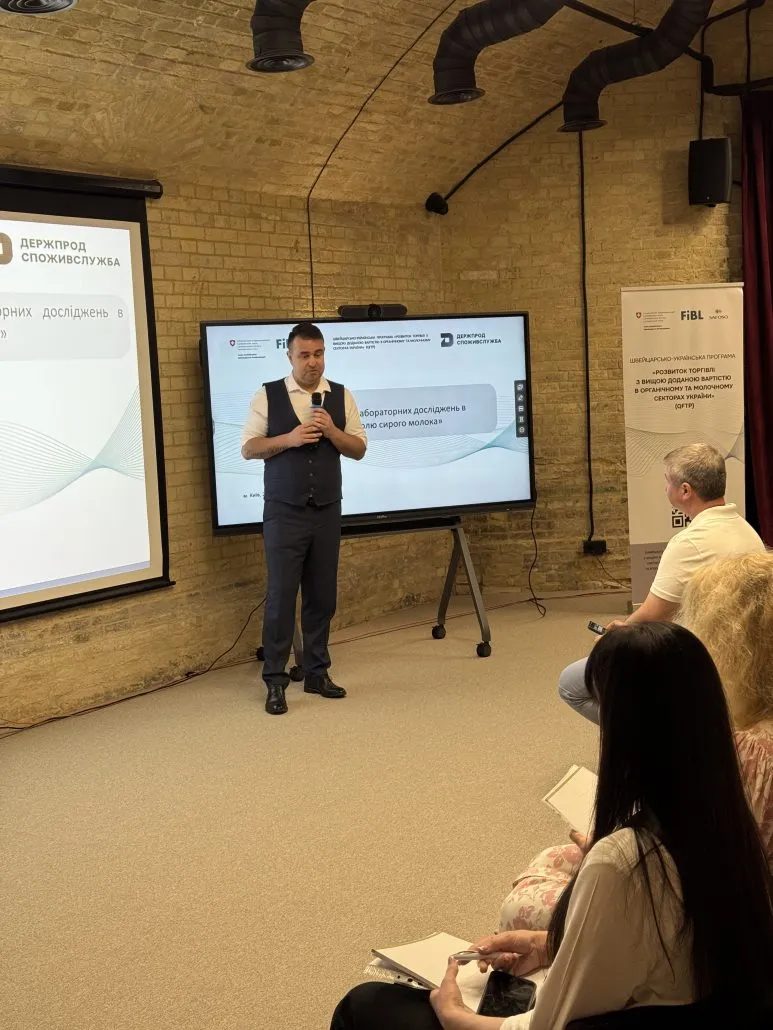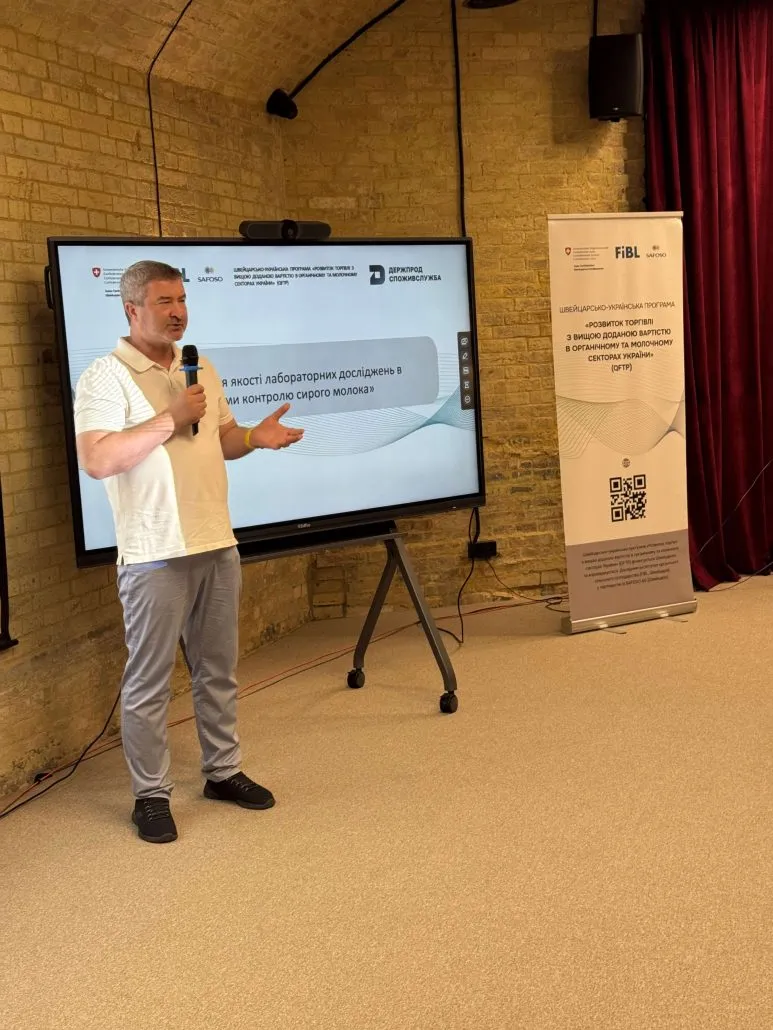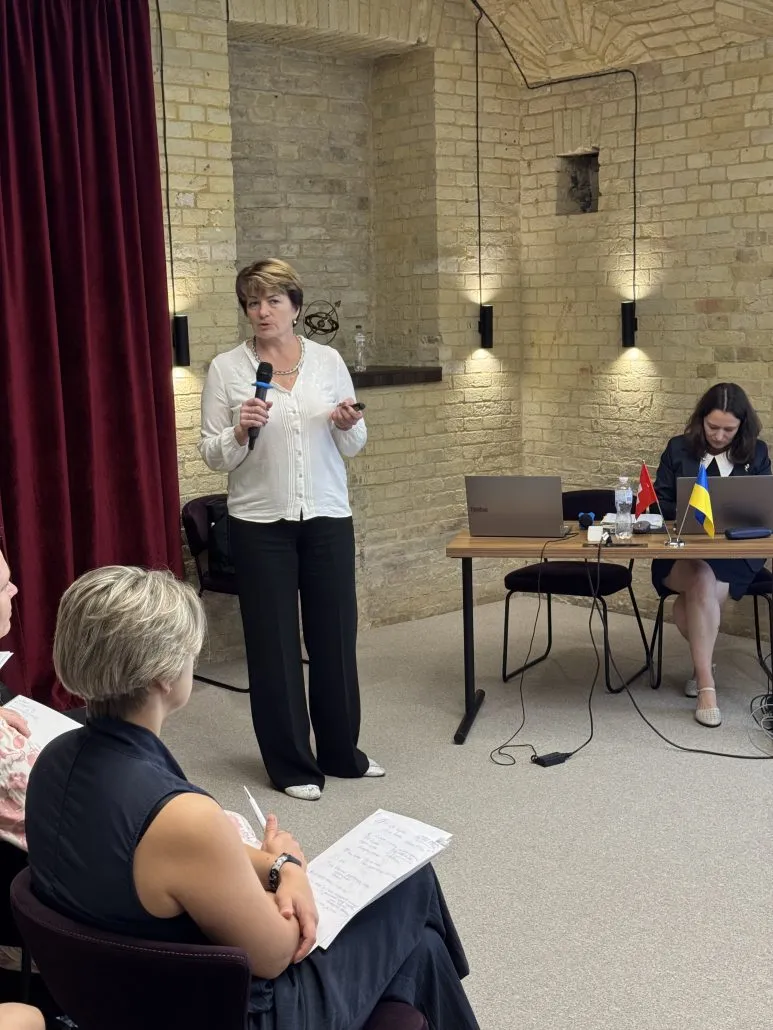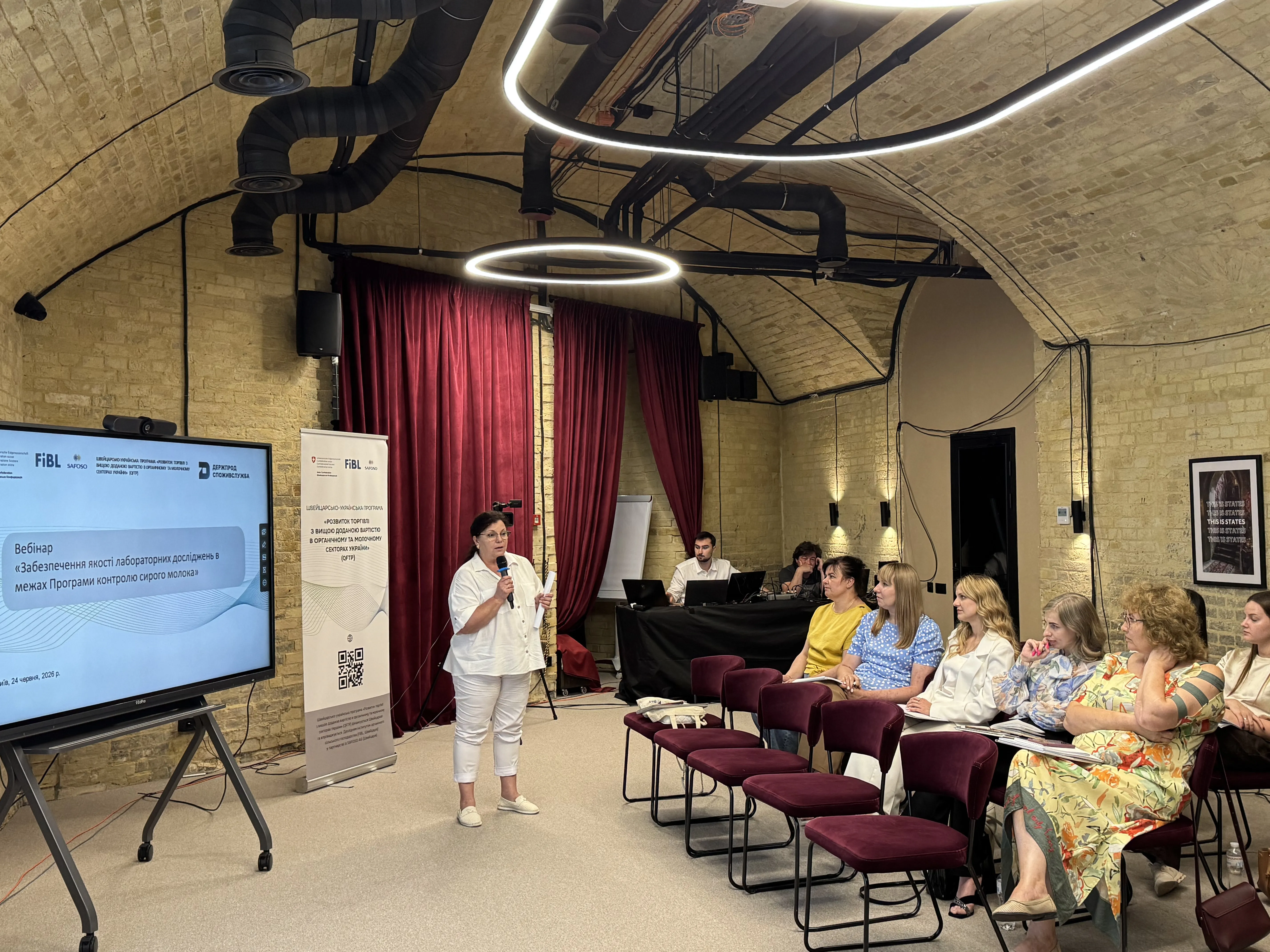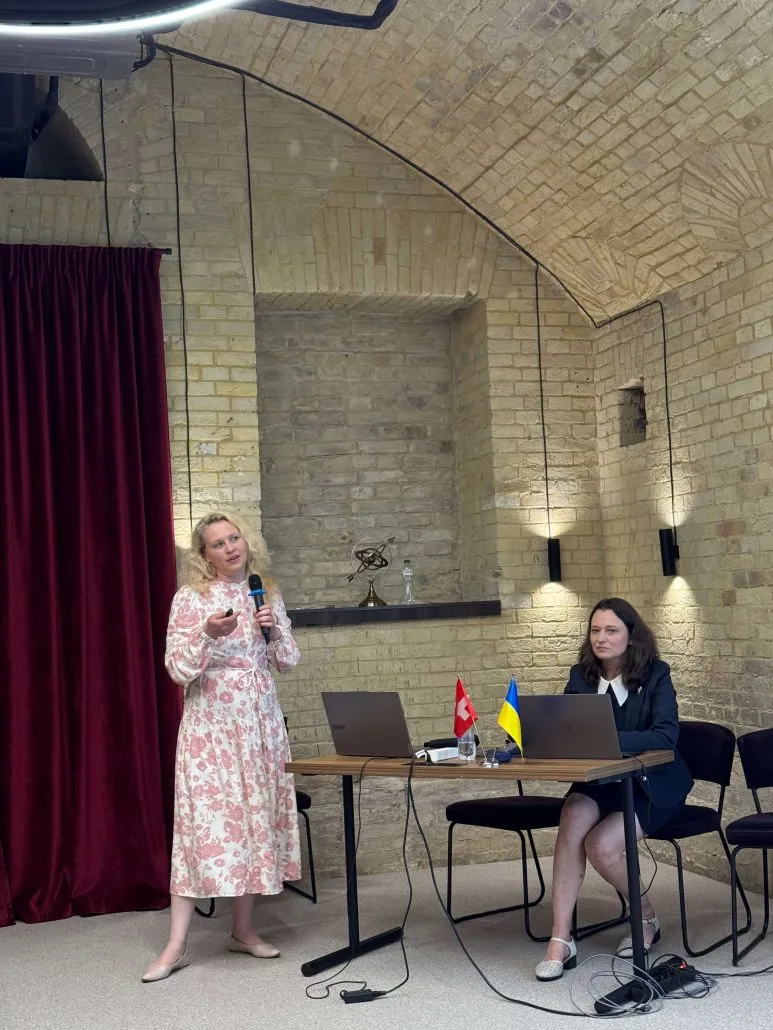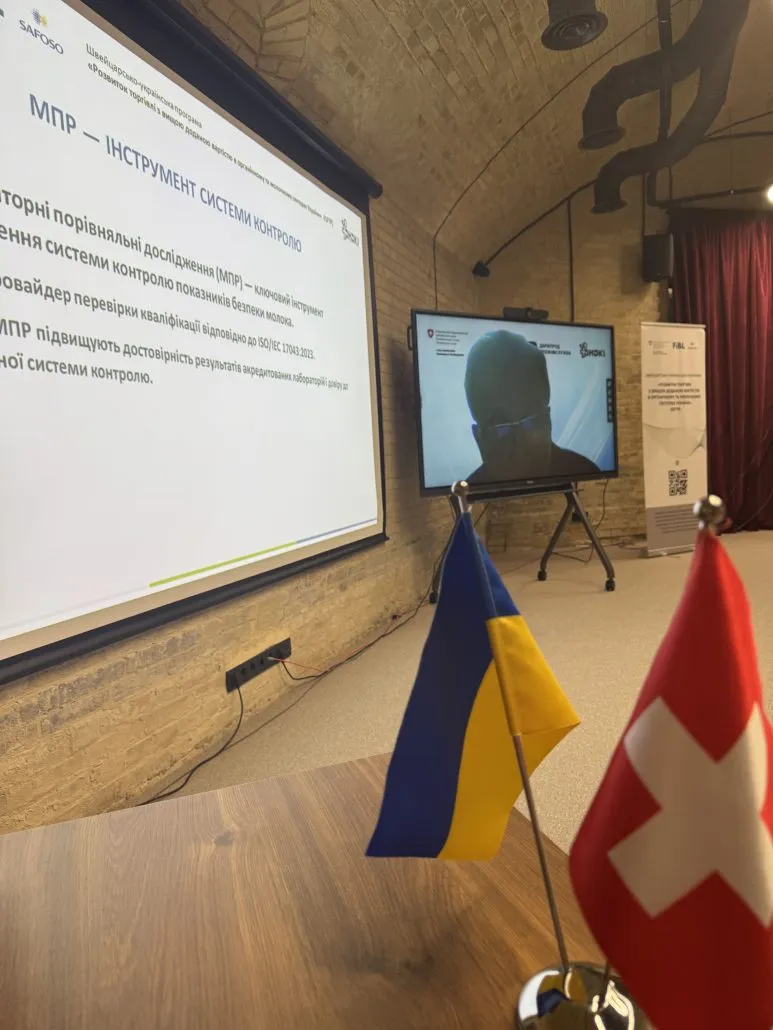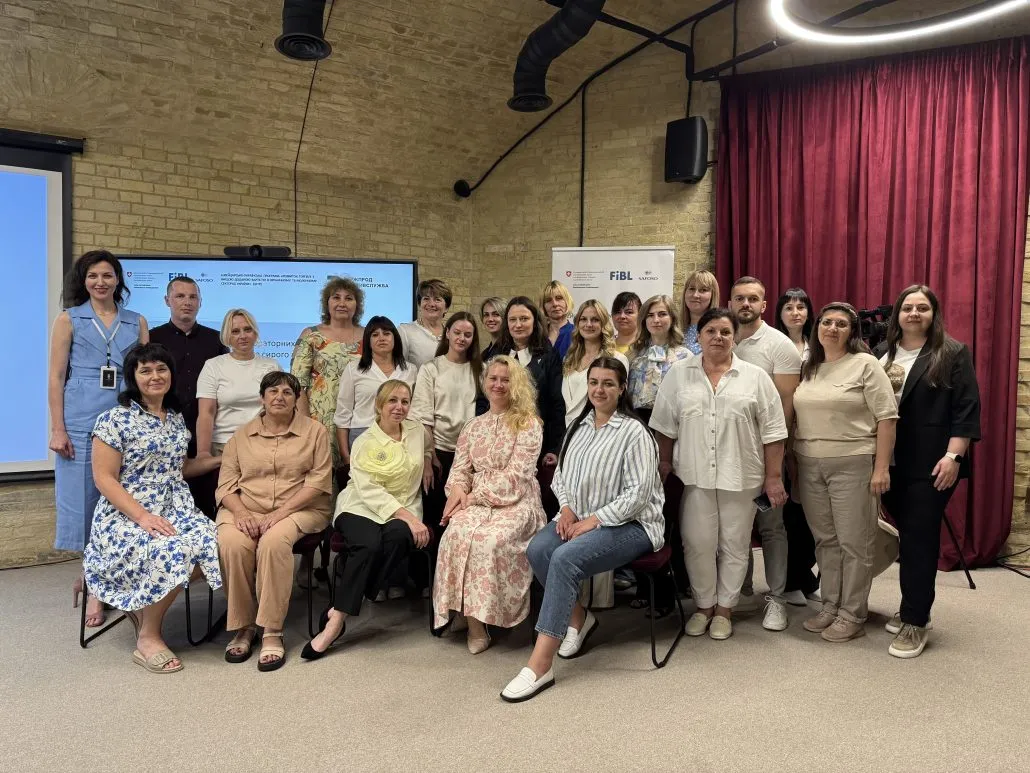
On 24 June 2026, with the support of the Swiss-Ukrainian Programme “Higher Value Added Trade from the Organic and Dairy Sector in Ukraine” (QFTP), a webinar entitled “Ensuring the Quality of Laboratory Tests within the Raw Milk Control Programme (RMCP)” took place.
The event was attended by over 150 participants, including specialists from the central office of the State Service of Ukraine on Food Safety and Consumer Protection (SSUFSCP), the State Scientific-Research Control Institute of Veterinary Medicinal Products and Feed Additives (SCIVP), authorised laboratories conducting raw milk testing under the RMCP, as well as experts from QFTP.
During the webinar, participants discussed the results of the RMCP for 2025, the outcomes of authorised laboratories’ participation in proficiency tests, as well as best laboratory practices and recommendations for future improvements to the RMCP.
Opening the webinar, Oleg Osiian, First Deputy Head of the SSUFSCP, emphasised the importance of effective cooperation between competent authorities, laboratories and international partners to ensure high-quality raw milk control and the further harmonisation of Ukraine’s food safety system with European requirements.
“I am genuinely committed to the development of Ukraine’s dairy sector. Our key task is to establish a modern, transparent quality control system, in which the Dairy Module will provide a single database. It is also important to introduce mandatory data reporting by producers at a legislative level – this is the foundation of trust, safety and the competitiveness of our products. We have ambitious goals: establishing a national reference laboratory, digitising processes, developing exports and entering new markets. Ukrainian producers are already proving that quality is their priority. I am convinced that through cooperation, openness and the support of international partners, we will be able to achieve systemic change and strengthen Ukraine’s position in the global market,” he said.
Igor Kravchenko, QFTP Local Programme Manager, noted in his speech that Switzerland will continue to support the SSUFSCP in implementing the RMCP for raw milk in Ukraine, in particular by developing laboratory capacity, improving the regulatory framework and modernising the “Dairy Module” software.
“When the QFTP team began developing a raw milk control system in Ukraine over ten years ago, it was more of a dream than a reality. But thanks to the joint efforts of the team, our partners and the industry, we have managed, step by step, to achieve significant results. Today, we already have a fully operational IT platform, the “Dairy Module”, an expanded network of laboratories – which has grown from 4 to 45 – and a designated candidate for a reference laboratory. At the same time, this event is not just about the results, but about dialogue, the exchange of experience and the joint search for solutions for the sector’s further development,” he said.
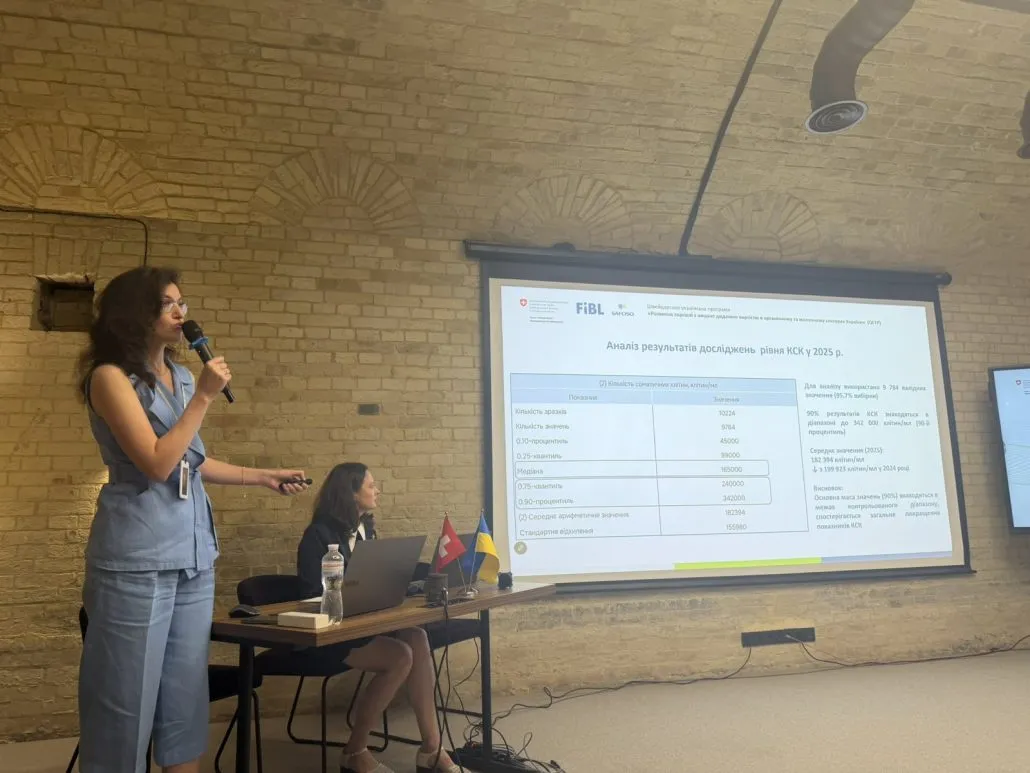
During the event, participants were introduced to the key results of the RMCP in 2025. Iryna Vysotska, Deputy Local Manager, Dairy Sector Component Coordinator of the Swiss-Ukrainian QFTP Programme, presented the achievements of the RMCP’s implementation and the results of the analysis and evaluation of laboratory tests, as set out in the annual report, which is available via the link (in Ukrainian only).
Particular attention was paid to the assessment of laboratory test results, the collection and handling of milk samples, the interpretation of test results, and the causes of invalid results. Participants examined practical case studies and took part in simulation exercises aimed at improving laboratory procedures.
During the webinar, Tetiana Garkavenko, Senior Advisor for the Dairy Sector Component, presented a video tutorial on using the “Laboratory” section of the Dairy Module.
Olena Kaminska, Quality Specialist at the SCIVP, presented a report on the role of proficiency testing in ensuring the quality of laboratory testing. She emphasised the importance of regularly assessing laboratory competence as a means of confirming the reliability of test results and compliance with international requirements.
The experts presented the results of autorised laboratories’ participation in proficiency tests for total bacterial count, somatic cell count and the freezing point of milk. Dmytro Yanovych, Head of the Research Department for Physico-Chemical Methods of SCIVP, presented the results of the proficiency test on the determination of inhibitors and antimicrobial veterinary medicinal products. The presentation covered an analysis of the results obtained and practical aspects of improving the accuracy of such examinations.
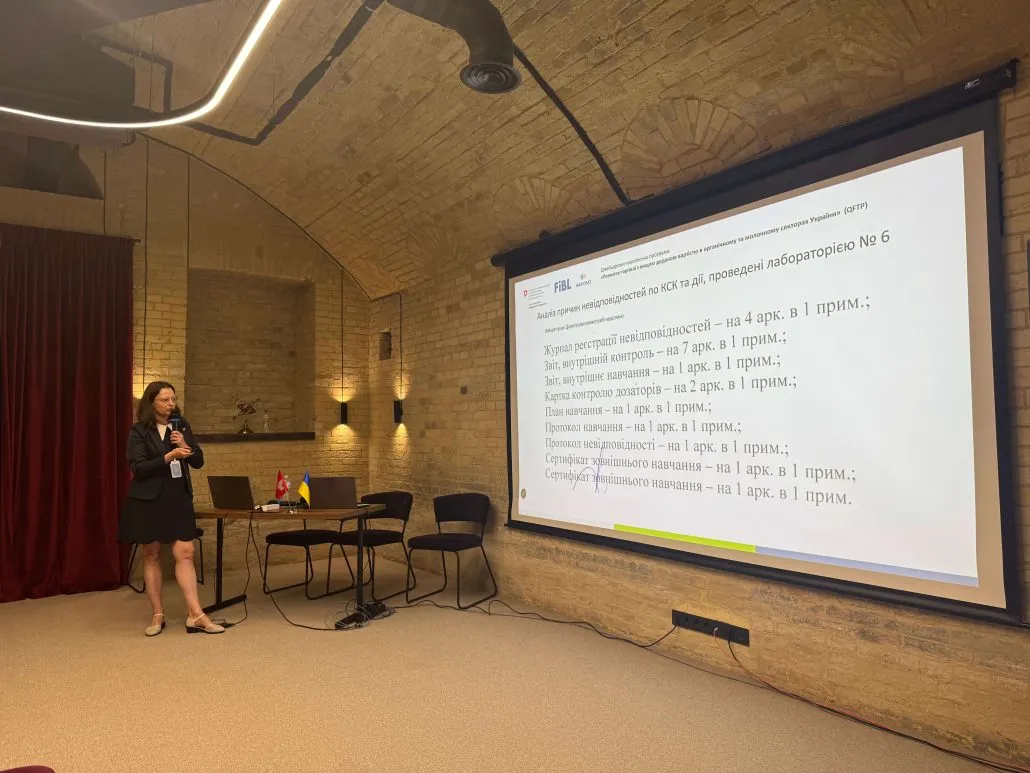
Iryna Seroshtan, Head of the Department for Coordination of Activities of the SSUFSCP’ Institutions, examined the reasons for obtaining questionable and unacceptable results during proficiency tests––– of authorised laboratories.
Participants discussed approaches to implementing corrective measures aimed at rectifying the identified non-conformities and improving laboratory performance.
Iryna Vysotska, Deputy Local Manager, Dairy Sector Component Coordinator of the Swiss-Ukrainian QFTP Programme, noted: “Systematic improvements to laboratory practices, the professional development of specialists and the development of quality control tools are essential prerequisites for ensuring the safety of dairy products and the further integration of the Ukrainian dairy sector into the European market.”
Find out more about the RMCP in Ukraine here (in Ukrainian only).