Switzerland has been consistently supporting the dairy sector of Ukraine within the framework of the Swiss-Ukrainian Programme “Higher Value Added Trade from the Organic and Dairy Sector in Ukraine” (QFTP). In order to strengthen the capacity of small and medium-sized milk producers and processors (SMEs), QFTP is developing a service and advisory framework and facilitating access to knowledge and best practices. A key focus of QFTP’s work is to strengthen the capacity of service providers in the public and private sectors, as well as business associations, to promote the adoption of good practices, create added value and promote sustainable trade.
One of the tools for providing such support is the awarding of small grants on a competitive basis to service providers in the dairy sector, to enable them to carry out their advisory and support activities and provide practical assistance to SMEs. These competitions have now been organised by QFTP for the seventh time, based on themes announced in advance and a selection procedure following defined criteria (in Ukrainian only). This year, support has been focused on six thematic areas:
- Legal requirements and food safety – informing SMEs about food and feed safety requirements, animal health and welfare rules and the Raw Milk Control Programme (RMCP).
- Consumer promotion – activities to raise awareness of the benefits of regular consumption of milk and dairy products.
- Best practices and value addition – dissemination of knowledge for safe production, trade development and value addition.
- Advisory services – support in implementing best practices for milk producers and processors.
- Cheese training centers – strengthening cheese production, trade and promotion capacities.
- Restoration of the affected regions – consultancy and support to SMEs in 11 war-affected regions.
According to the results of the call for proposals announced in autumn 2025, 41 applications were received from 16 service providers, of which 8 projects from 7 unique applicants were selected for further support.
Among the approved applications are important projects that will help to improve the knowledge of milk and dairy business operators, particularly regarding the quality control of raw milk, approaches to diagnosing mastitis pathogens, disease prevention, trade development and the creation of added value in the dairy sector. Support for SMEs in the regions of Ukraine most affected by the war remains a priority. Unfortunately, the implementation of one project, at the applicant’s initiative, has been suspended.
Let’s take a closer look at the results of the projects of each service provider.
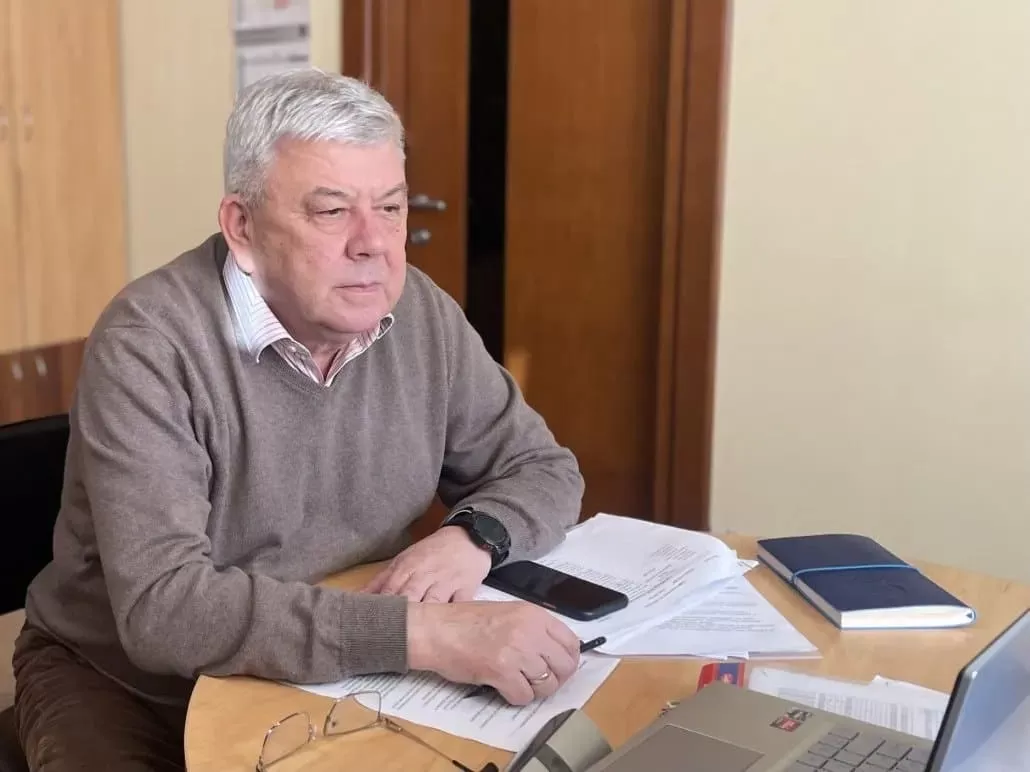
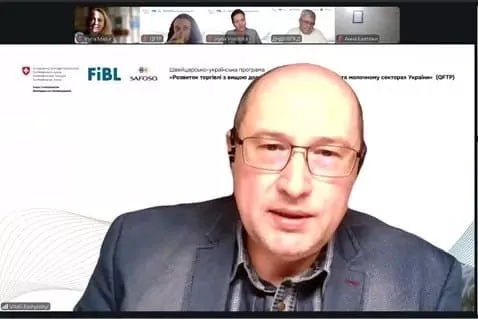
State Scientific-Research Control Institute of Veterinary Medicinal Products and Feed Additives (SCIVP) has conducted five online training sessions on the determination of residues of antimicrobial substances, antibiotics and other inhibitors in raw milk as part of the Raw Milk Control Programme to ensure the quality and safety of dairy products.
Around 2,500 participants took part in the events, including representatives of milk and dairy business operators, the State Service of Ukraine on Food Safety and Consumer Protection, testing laboratories, higher education institutions, research institutions and other interested specialists. During the training, discussion sessions were held, in which trainers answered questions received both during participant registration and directly during the events. As part of the project, an online course entitled “Methods for determining residues of antimicrobial veterinary medicines and inhibitors in milk” was also developed and launched and is available on the official web platform of the SCIVP. The course consists of eight thematic lectures covering key aspects of laboratory control of residues of antimicrobial substances/antibiotics and other inhibitors in raw milk.
More information about the outcomes of the first and second online training sessions is available at the following link, while information on the third, fourth, and fifth training sessions can be found here.
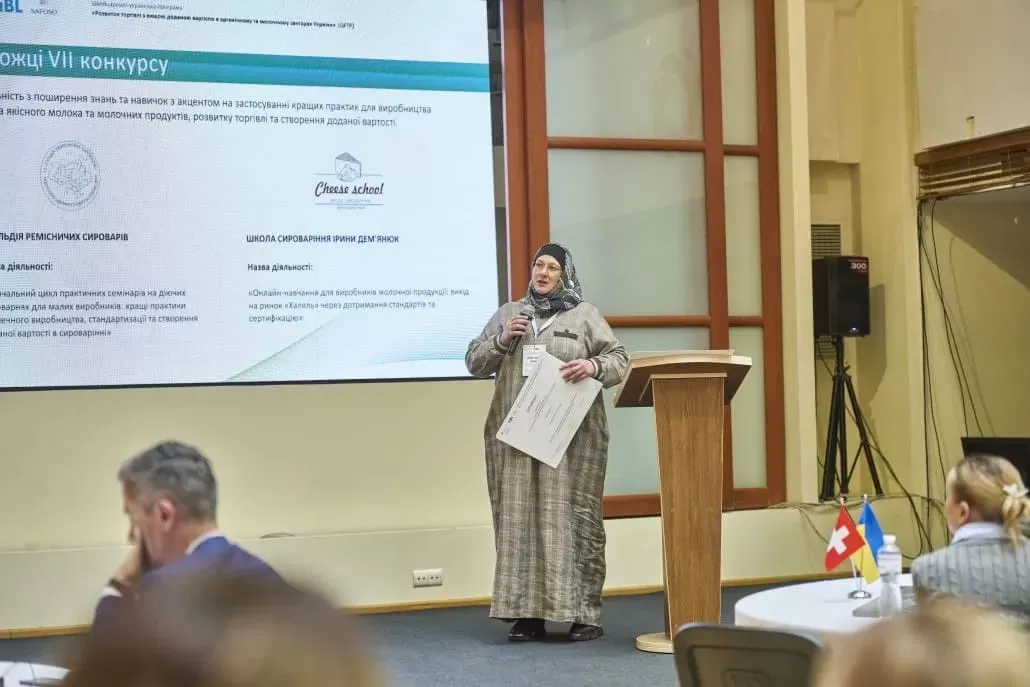
In April 2026, Iryna Demianiuk Cheese Making School organised a series of online seminars entitled “Halal: Standards, Certification and Access to New Markets” for cheesemakers and dairy producers. Sixty-one representatives from the sector took part in the training.
The programme was designed to familiarise participants with Halal standards, prepare them for certification and help them overcome technical barriers to entering promising markets in Asia, Africa and the Gulf region. Halal certification is one of the key tools for expanding export opportunities for Ukrainian producers.
At the participants’ request, a “Halal Certification Roadmap for Dairy Enterprises” was developed – a step-by-step practical guide to preparing for an audit, which simplifies the certification process for producers.
In addition, a Memorandum of Cooperation was signed between the non-governmental organisation “Guild of Artisan Cheesemakers of Ukraine” and the Ukrainian Association of Halal Industry “Ukrhalal”. The document provides for joint work on promoting Halal products, raising consumer awareness and developing a culture of producing such products in Ukraine.
The implementation of these initiatives will help to strengthen the sector’s export potential and create new opportunities for the development of both artisanal and industrial cheese-making.
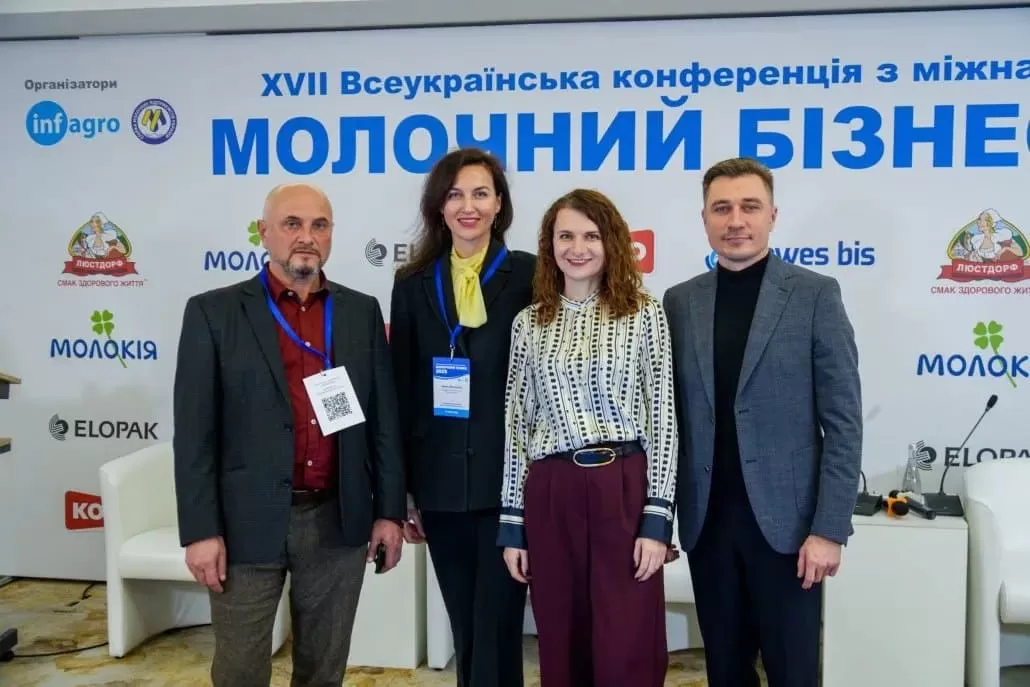
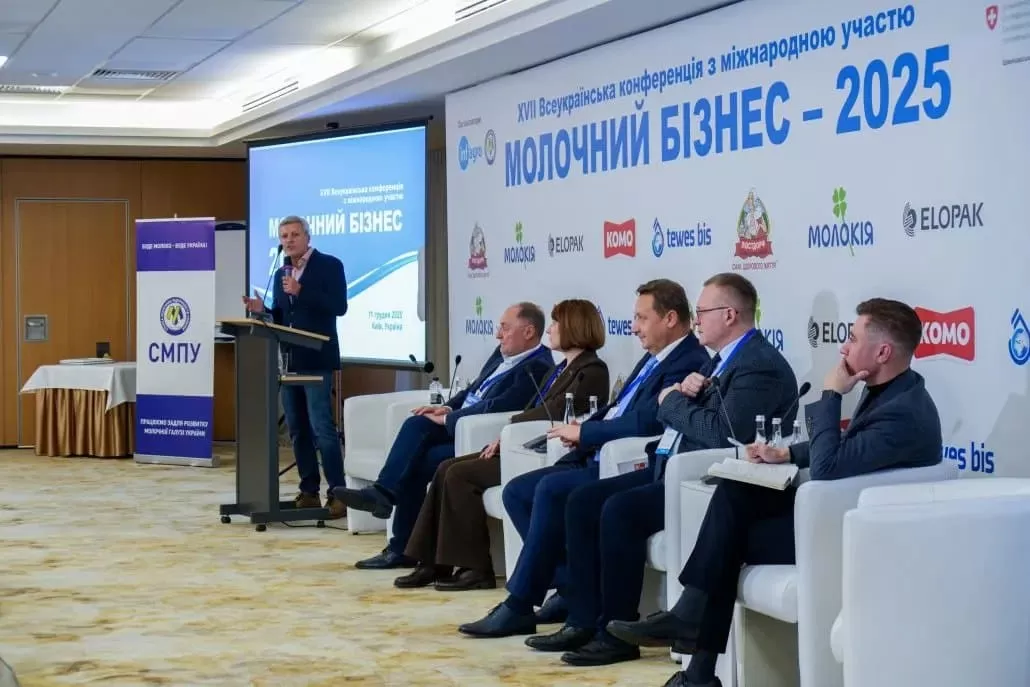
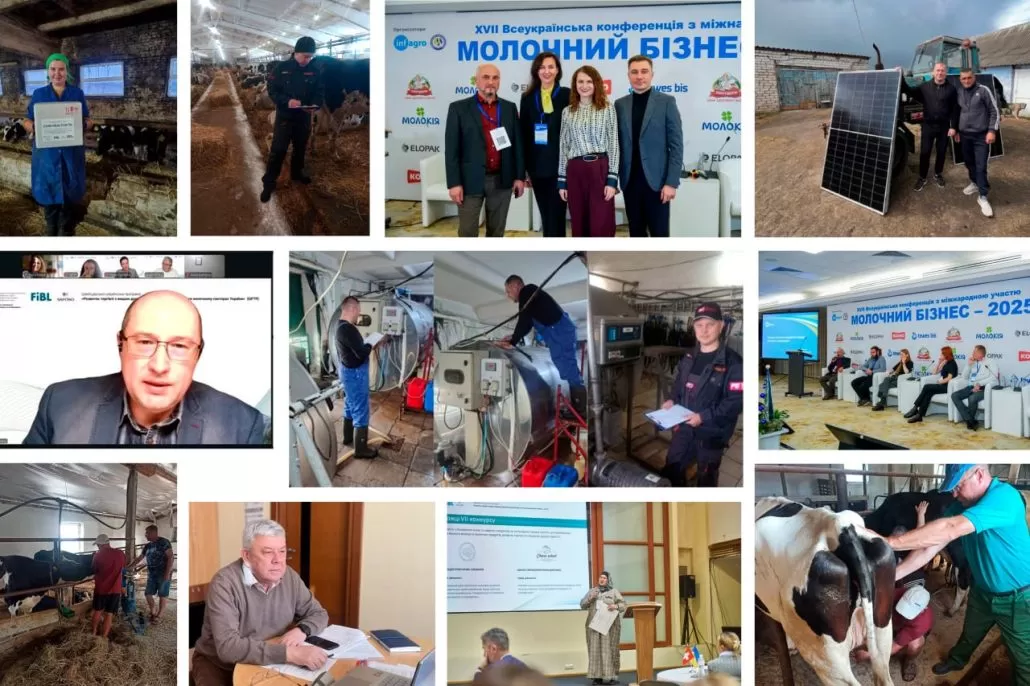
One project was supported in the area of strengthening the export capacity of Ukrainian producers, namely from the analytical agency INFAGRO LLC. In cooperation with the Union of Dairy Enterprises of Ukraine, the 17th All-Ukrainian Conference with International Participation «Dairy Business 2025» was held. The event was attended by representatives of 29 dairy companies, which operate 42 production facilities. This event serves as a traditional platform for networking with service providers and suppliers of related materials, traders, experts, academics and representatives of executive authorities. For further details, please see the press release via the link.
Small private enterprise “Milksyr” implemented the project “Online dairy business consultant: consulting support for farmers and small cheese factories”, aimed at enhancing the professional capacity of milk producers and artisan cheese makers.
As part of the project:
• 4 training seminars were held on quality control and safety in milk production, mastitis prevention, the legal and accounting aspects of farm management, requirements for the layout of production premises, the selection and placement of equipment, and opportunities for securing grant funding;
• 30 individual online consultations and 5 on-site consultations were provided for farmers and owners of small cheese dairies;
• an electronic practical guide was developed, containing over 50 answers to the most common questions from farmers and cheesemakers regarding production and business development.
The implementation of the project helps to enhance the managerial and professional skills of farmers and cheese-maker owners, introduce modern quality and safety standards for dairy products, and support the development of small businesses through the provision of advisory support and access to grant funding. It is expected that this will help to boost the competitiveness of small producers, facilitate their integration into the formal market, improve product quality and foster the development of a dairy sector with higher added value.
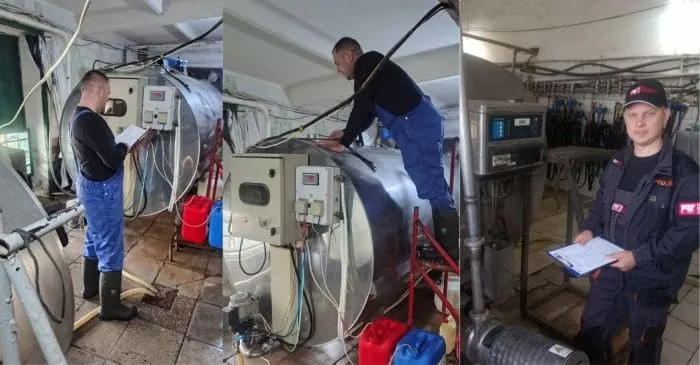
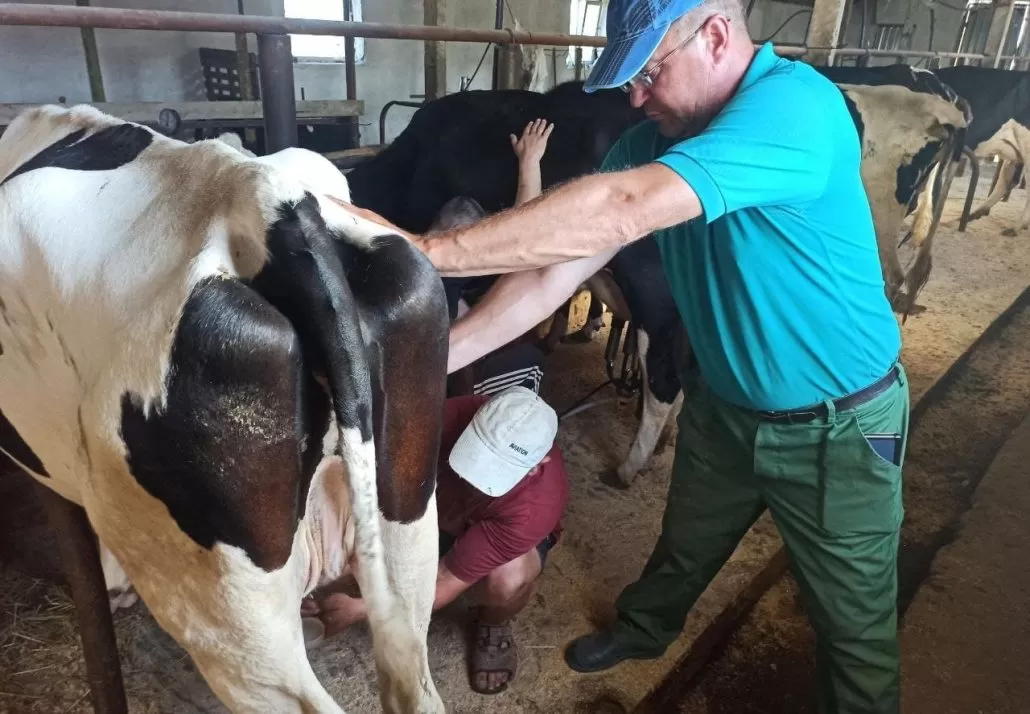
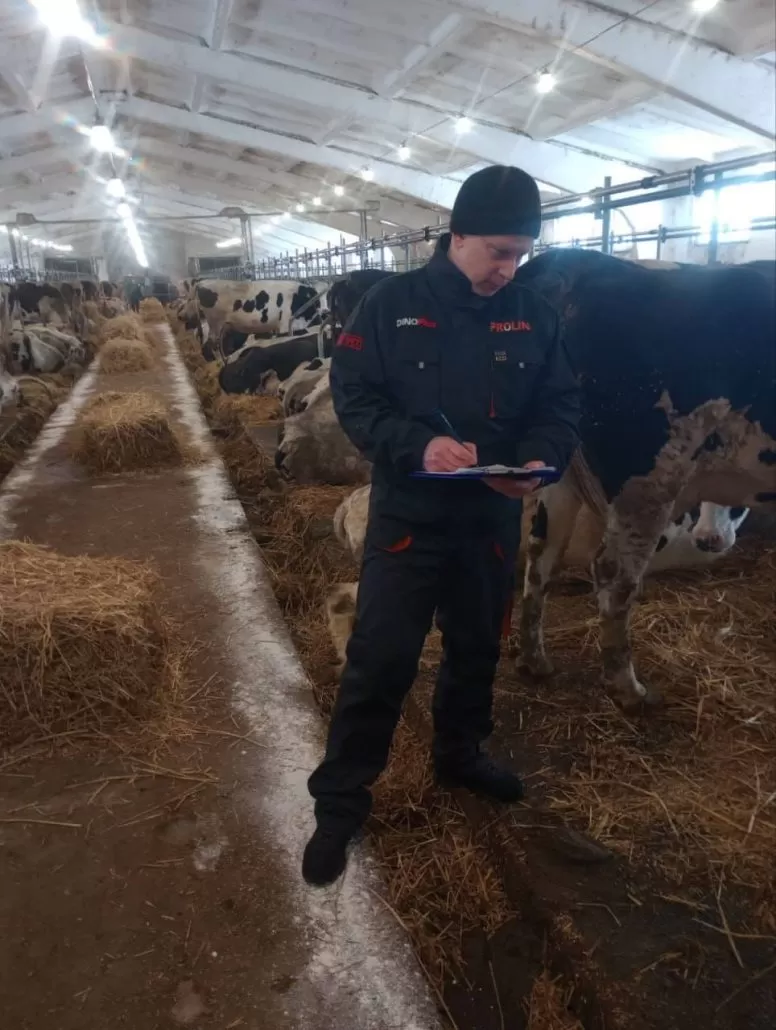
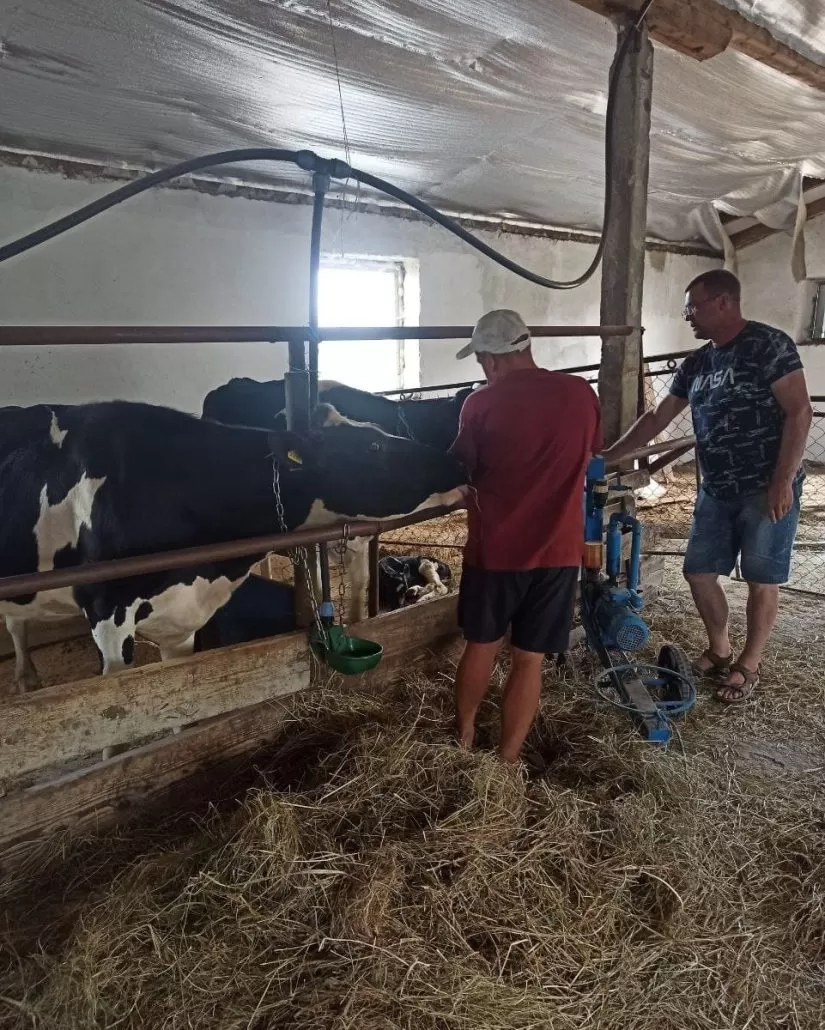
Private Enterprise “Center for Veterinary Services” (CVS) implemented the project “Improving knowledge and advising SMEs producing milk on approaches to diagnosing mastitis pathogens, disease prevention and hygiene requirements for milk”. As part of the project, the CVS staff provided advisory support to 13 farms in the Dnipropetrovsk, Poltava, Sumy, Kharkiv and Chernihiv regions whith a total milking herd of 5,197 cows. Each farm received a comprehensive assessment of its dairy unit’s operations, advice on improving milk production conditions, and recommendations on the prevention and treatment of mastitis.
During the consultations, the specialists provided practical advice on record-keeping and staff management, cattle reproduction and health, and the organisation of milking, feeding and herd management. In addition, the SMEs received reports on the results of the initial and follow-up audits of their dairy operations, the results of milk laboratory tests carried out by UmanLabs, including recommended treatment regimens for mastitis, as well as standard operating procedures for diagnosing mastitis. For more details about the project, follow the link.
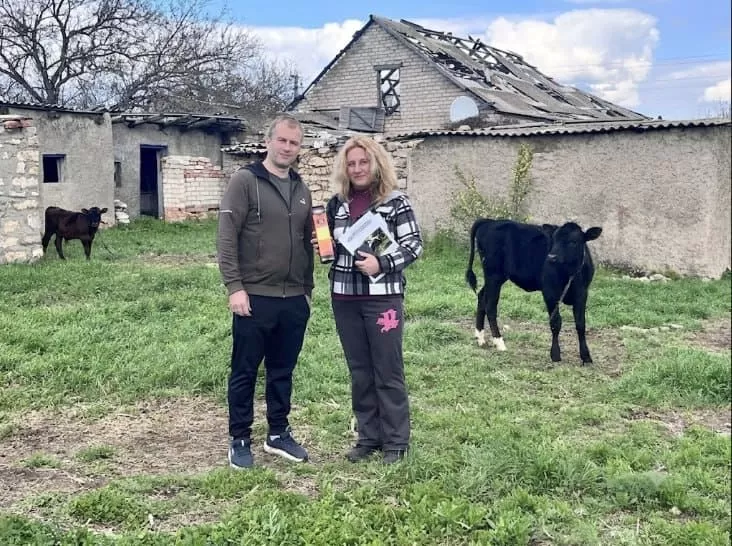
Dairy Management Systems LLC (DMS) carried out a series of activities as part of two regional projects entitled “Improving knowledge and consulting for SME milk producers in the Mykolaiv and Odesa regions recovering from war-related damage”.
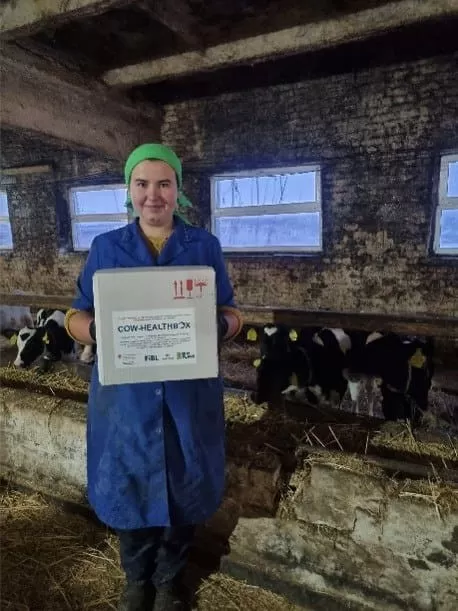
As a result, 55 farms received advisory support – 30 in the Odesa region and 25 in the Mykolaiv region. During visits to the farms, particular attention was paid to issues such as mastitis prevention, adjusting feeding regimes, improving animal welfare conditions, and compliance with hygiene requirements for milk production, amongst others. Farmers also received individual consultations on milk production technology, farm renovation and refurbishment, improving milk quality and safety, energy efficiency, sustainable use of natural resources and effective farm management. Further support for producers was provided remotely. To support the farms, 600 samples of raw milk were also analysed for key quality indicators.
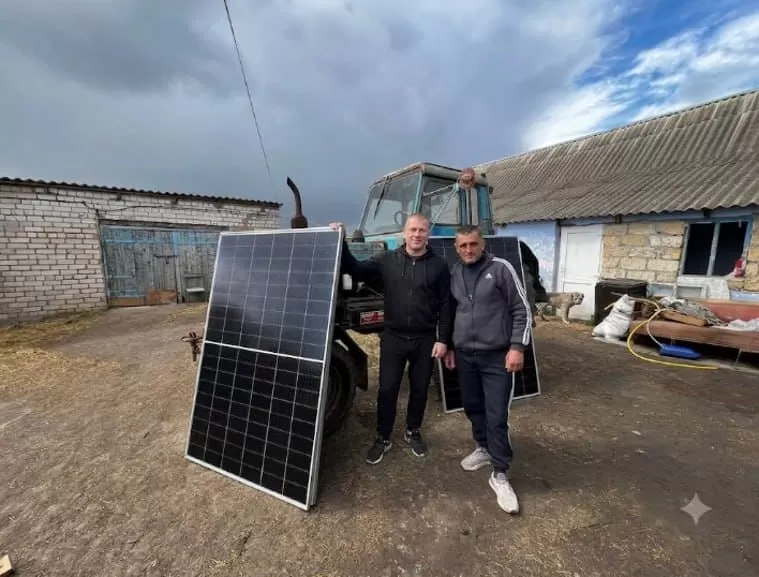
In addition, 20 farms in two regions received solar panels along with advice on their installation and operation, whilst a further 35 farms were provided with pest control equipment.
As part of the project, five training sessions and a practical workshop on cheese-making were also held in the Odesa region. Participants deepened their knowledge of cattle welfare, legislative requirements for milk quality, the Raw Milk Control Programme, and energy efficiency on farms, whilst also learning the basics of artisanal cheese production and the implementation of the HACCP system.
The implementation of the project has helped to enhance the professional capacity of small-scale milk producers, introduce modern approaches to farm management, and establish regular laboratory monitoring of milk quality and safety.
In total, between October 2025 and June 2026, 312 SMEs took part in the implemented projects, including 68 dairy farms in the regions most affected by the war.
Given the importance of an effective expert and service environment for developing the business environment and trade potential of the dairy sector, improving the quality and safety of milk and dairy products, and recovering from the effects of the ongoing war, QFTP’s support to dairy service providers will continue with a focus on relevant needs and challenges in the new phase of the Programme.